0

No products in the cart.

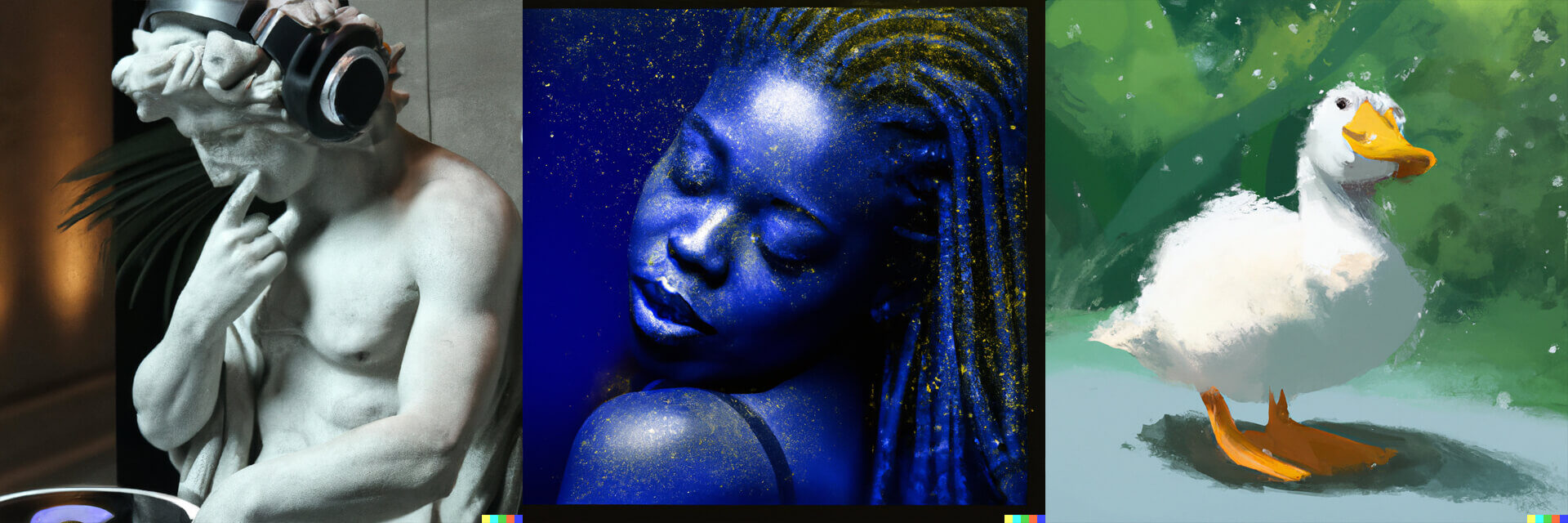
Collage of Surreal AI Art Images Featuring a Beat-Boxing Status of David Wearing Headphones, Black Woman With Dreadlocks in Blue Covered With Gold Dust, and a White Duck Painted on a Green Background from Left to Right.
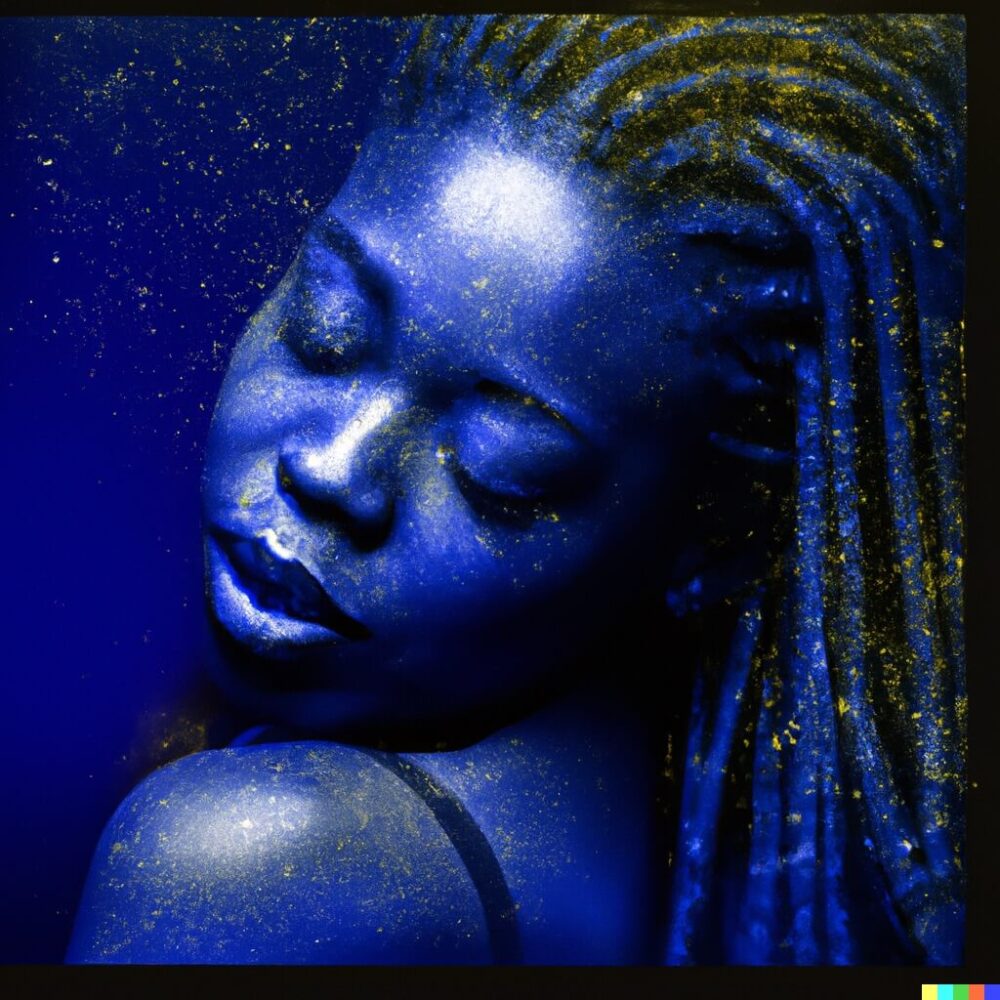
AI Generated Image of Black Woman With Dreadlocks Gazing Over Her Shoulder With Her Eyes Closed in Dark Blue With Gold Shimmer Filter
BLOG

Should Artists Fear AI Art Generators?

A new art generating artificial intelligence app, Lensa AI, went viral on social media in December, 2022. The avatar generating AI app sparked intense debate about the the future of art and the ethics of AI art.

Fears like “what does AI art mean for the future of artists?” and “will AI art replace human art?” bubbled to the surface. 

Philosophical questions of “is AI art real art?” went viral on Reddit. Debates in the comments exploded. 

The #aiart began trending on Twitter. Many artists opened up about their fears and beliefs surrounding AI art. Supporters rallied behind them. Proponents of AI art showed the benefits of AI and how they are using the tool to their advantage. 

Experts were consulted to debate the ethics of AI art on the news

Google searches for “AI art” related phrases increased 525% within a few days. 

Here at BIG Wall Décor we support artists. We are fascinated with this intense reaction to AI art and what it means for the future of art. 
We went to our artists, most vulnerable to AI art, to hear their thoughts and opinions on its implications.
*Important Disclosure – Most artwork for this blog post was created using DALL-E 2 AI.
Painting of a short haired cat with yellow eyes sitting as if it was the Mona Lisa in a golden frame leaning up against a gray wall.

What is AI Art? 

AI art is any artwork that is created with the use or help of artificial intelligence. AI is a field of computer science that builds machines to mimic human thought processes. AI generates products that are so lifelike, you may think a human produced them. 

Artificial intelligence is distinctly different from traditional computer science and programming. AI is built to learn, whereas traditional systems are built to produce a specific output. The more humans interact with AI, the more the system learns. AI adapts and is able to produce an output that seems like it can “think” and respond as a human would. 

How is AI Art Generated? 

In an oversimplification, humans input the parameters for their art vision. Usually within minutes or seconds, the AI machine “creates” art that you asked for. 

Traditionally, computer scientists would write programs where “input = a specific output.” Now, programmers write algorithms that teach AI machines how to analyze thousands of images online. Then the algorithm is trained to create an output based on the words or images input. 

The process looks something like this:

  • AI scans thousands of images in seconds.
  • AI compiles the data.
  • AI analyzes how the data relates to the inputs.
  • AI creates a unique output based on what it scanned. 
  • Humans prompt changes and edits to the AI art.
  • AI learns how to change the art to better fit the human’s vision. 

In the next iteration, the AI will have learned about your thought process based on how you wanted to change and edit the image. It will use this data to attempt to create better art on its next output. 

The more you interact with AI and the more specific and descriptive you are with inputs, better AI art output will result. 

How Do You Tell The AI What Art You Want Created?

There are two main ways to input parameters into AI art systems. 

The first way to create AI art is to describe the artwork you would like to create with text

You can use as short or robust of a description as you would like. The more specific you are in your description, the better. Longer descriptions give AI more information. This results in AI art that more closely matches the vision in your mind.

Here’s a quick example we created with DALL-E 2 AI

A short description like “super cute puppy” generates these four images in seconds:

Realistic looking collage of four small light colored puppies generated by AI

Whereas a more detailed description like “super cute puppy playing outside Van Gogh style” generates these four images:

Van Gogh painting style collage of four small light colored puppies generated by AI

The rule of thumb is longer, more detailed descriptions will result in better images. “Better” is a subjective term that refers in this scenario to “more like the art you were envisioning in your mind.”

The second way to create AI art is to input images, art, or photos that already exist. Then instruct the AI to edit the piece. 

Artist Zach Doehler has been experimenting with his photography in Midjourney AI

Below is Doehler’s original artwork, “Alpine Pastels,” which he input into Midjourney AI. He took this photo in the Alpine Mountain Range. Then he edited the colors in his distinct, vibrant style using photoshop and lightroom.

Colorful Alpine Mountain range with bright reds in the foreground, clear blue water in the midground and light pink sky in the background

Below are the outputs that Midjourney AI created from Doehler’s piece. The AI kept the same vibrant color style but edited the colors slightly and adjusted the shape of the mountain ranges. In the below AI images the mountain rangs take on a more mystical or otherworldly shape. It feels less realistic and more like a mountain range you would see in a movie featuring a different planet. 

Three variations of one image of the Alpine mountains edited to have different vibrant color variations, mountain shapes, and sources of light. All involve variations of vibrant reds and blues.

Doehler gives his thoughts and feedback on how the AI edited his piece. “[Midjourney AI] created something that was surprisingly cool! I’m creating art using my own art that I’ve spent years refining and working towards. Now it feels like I can use this tech to complement my own style and creativity.” Follow Doehler’s artistic experiment as he continues to have AI edit his photography on Instagram @calibreus.ai.

What Are The Best AI Art generators?

There are countless blogs (like this one) that are dedicated to ranking AI art tools. We compiled data from blog posts, interviewed artists that use AI, and tested a few AI tools ourselves. We determined the three listed below are our favorite AI art generating tools.

*Note everyday, new AI art generators are released so a new “best” AI art app could take over.  

Jasper Art AI 

Input your text description and the AI generates images. You can edit the style and quality of the artwork quickly and easily. Free 5 day trial where you can generate 200 images for free. After the trial period an unlimited plan is available for $20/ month. Received 4.9/5 stars in 5,000+ reviews. 

Jasper also has AI text generating capabilities. It can be used to create product descriptions, blog posts, social media captions, and more. These two AI tools from Jasper pair together well.

DALL-E 2 AI

This open source AI from OpenAI creates realistic images based on your typed description. The tool is free to use when you create an account. 

OpenAI is a research company dedicated to creating AI that benefits humanity. Their system is designed with safety in mind. It will not generate images based on violence, hate, or adult images. 

OpenAI also is training a chat tool ChatGPT which interacts with you conversationally. 

Midjourney AI

Join their discord server and then join one of the rooms that begin with “newbies.” To generate art, send a message that starts with “/image.” Then enter the description and input of the image you want to create. The result – four high-quality images. Limited free trial of 25 queries. 

AI art created with Midjourney was the first art to win in a fine arts competition. The piece won 1st place in the “digitally manipulated photography” category. 

AI art winning in an art competition over human art has added fuel to the fire of which is better, AI art or human art and is AI art real art?

Instagram Stories Poll From BIG Wall Décor on black back ground Asking "Is AI Art 'Real Art'?" with big eyes emoji. 18% Answered Yes. 82% Answered No.

Is AI Art Really Art?

On 12/10/22 BIG Wall Décor polled its Instagram followers to ask, is AI art “real art?” The overwhelming majority, 82% of responders said “No” AI art is not “real art.” Only 18% of responders answered that “yes” AI art is real art. 

Photorealistic and surreal artist Captvart said: 

If you look up the definition of art it says “the expression or application of human creative skill and imagination.” With that being said, AI is a good tool to help you visualize your thoughts and then build from there on the work of art you want to make.

AI art may become an integral part of the artistic process, but as a standalone piece most agree that AI art is not real art. 

The Case for AI Art is Real Art.

Jason Allen is the first person to enter AI art, Théâtre D’opéra Spatial, into an art competition and win. Since AI art beat human art in a competition, it’s fair to argue that if AI art is “better than” human art, shouldn’t it also be considered “real art?” 

Many artists argue that what makes art “real” is the ability to evoke emotion. The competition judges that awarded Allen’s AI art 1st prize said, “Even if we had known [the piece was AI art] we still would’ve awarded it first place based on the story and spirit it invokes.” 

Many artists argue it isn’t possible for a “soulless robot” to put soul and emotion into art.

This competition revealed that AI can create art that evokes emotion and tells stories, much like human art.

Additionally, there is a logical argument for AI art qualifying as “real” art. While artist Thomas Fotomas isn’t a proponent of AI art, he admits that he thinks of AI art as “real.” 

He explains his logical argument with the example that, “Robots make cars. Cars are real. If robots make art, then art is real.” He doesn’t agree with the thought process that to be “real” the product must be created by a human. 

But, Fotomas feels that because robots can make art doesn’t mean they should

The Case for AI Art Isn’t Real Art. 

The overwhelming response is that “no” AI art is not real art. Abstract artist Daniel Ignacio explained how most artists feel about the controversy:

We, artists, don’t just draw or paint on a canvas. We bleed. We transpose our emotions and turn them into art. Revealing a work of art we just made is us saying, “Hey, look at this part of my soul.” AI is terrifyingly good at creating pretty pictures. Some art will amaze you (AI), but some art will compel you to follow, will capture you, ruin you, and pull you into the psyche of its living, breathing author (the artist).

The main argument for AI art is “not real” is emotional. Artists argue that even if AI art makes you feel something or tells a story, it isn’t genuine or authentic. That is because AI is scanning existing human created art and using that to generate an output. 

In a sense, AI art is copying or replicating art made by humans. It’s a complicated process that is being mislabeled as “art.” Many artists go a step farther arguing that not only is AI art “fake,” it is a form of theft. 

Roll Up and Paint explains that she doesn’t think AI art is real because, “the computer isn’t really coming up with original ideas, it’s mashing up all the stolen art to create something it’s been prompted to make.” AI scans art online, without the expressed permission of the artists. Then it creates work that the machine claims is their own creation. 

Herein lies the ethical dilemma. By not requesting permission before scanning, AI might be stealing the artists’ creative rights

Instagram Stories Poll From BIG Wall Décor Asking "Will AI Help or Hurt Artists?" 5% Answered Help. 33% Answered Hurt. 62% Answered Both.

What Does AI Art Mean for Artists? How Does AI Affect Artists?

The knee-jerk reaction for any new technology is often fear, resentment, or criticism

The rapid advancement of AI art technology has evoked these reactions in artists. But that isn’t to say their instincts are wrong or misplaced. 

It’s safe to say that artists have never had it easy. They are often misunderstood and criticized for their work. Artists fear that as AI art goes viral, once again, they will be overlooked and underappreciated

Artists are now worried that their careers and livelihoods are threatened. AI is able to produce massive numbers of incredible pieces of art, without much work or effort on the human’s part. 

The overwhelming fear is that the cultural mindset will shift away from valuing the heart and soul that artists put into their art. Instead people might think, “If I can make art that looks like my favorite artist’s style using AI, why would I pay for authentic, artist-created art?

Conversely, some artists are excited about the opportunity AI art technology presents. They see the advancements in AI technology and focus on the benefits. 

The biggest, career boosting benefit is how AI makes it easier and faster to explore new ideas. As a result, artists’ brainstorming process is more efficient

There is also a big chunk of artists and graphic designers who feel “neutral” about AI. BIG Wall Décor’s graphic designer summed it up well: “I don’t think AI will replace artists (yet), but will instead help artists. Image sizes are small and pretty low-quality to use on their own. But the concepts, ideas, and framing of the images are an excellent jumping off point to use for artists.”

With any big change or new advancement in technology, it’s hard to say with 100% certainty that it is “good” or “bad.” The reality and truth of the matter likely lies somewhere in the middle. 

It’s no surprise that of the BIG Wall Décor Instagram users who answered the poll, “Will AI art help or hurt artists?” the majority selected “both” (62%). Approximately one third of respondents (33%) chose that AI art would “hurt” artists. Only 5% responded that AI art would “help” artists.

Instagram Stories Poll From BIG Wall Décor Asking "Is AI art good or bad?" 26% Answered Good. 74% Answered Bad.

Is AI Art Good or Bad?

The Argument for Why AI Art is Good

AI Art Allows Artists to Brainstorm Quickly

The real magic of art is taking an idea in your head and bringing it to life in the physical world. When artists suffer from creative block this transformation is next to impossible. AI is a tool that can help spark creativity and think about ideas in new artistic ways. 

AI Art Helps Artists Visualize Ideas

Many artists use art as a form of self-expression. Art allows them to connect with the universal struggles of humanity. Dreams and visions in artists’ heads can be difficult to recreate on paper. AI is a tool that can help artists hash out their ideas quickly. Then they can then focus on creating the masterpiece. 

AI Art Gives Artists The Ability to See Their Vision in a Matter of Seconds

Often, artists have to work feverishly to get ideas out of their head and before the inspiration vanishes. AI art is generated in minutes, or even seconds. Seeing part of their vision come to life with the help of AI art helps artists stay in their creative flow longer

AI Allows Artists to Create Art at a Speed and Scale Never Seen Before

It can be tough for artists to create artwork fast enough to sustain themselves. Depending on the type of art created, some masterpieces take months or even years to complete. AI produces artwork at a speed that is physically impossible for humans to compete with. The speed with which art can be produced by AI is an incredible benefit for artists using AI to brainstorm. It helps speed up a big part of the artistic process, allowing artists to make more pieces faster

New Opportunity for Artists as “Creative Directors” Instructing AI

Where one door closes, another opens. Some see the advancement of AI art as “the end of artists as we know them.” Others see the potential for a new career in art that could be more profitable and need less effort. One example would be working as a “Creative Director” and using AI art generators as your main tool. You could train and instruct AI, creating a large volume of art quickly. This could change what it means to “be an artist” for the better. Could this new job be the end of the “starving artist?”

AI image of astronaut standing in a tiny boat with a plain hazy yellow background

The Argument for Why AI Art is Bad

AI Art Increases Competition In An Already Saturated Market Space

There is no shortage of artists trying to pave the way for themselves in the 65.1 billion dollar global art market. While that seems like a massive market share for the estimated 2 million artists world-wide, artists will tell you they struggle to sell their pieces and make a living. AI can generate art faster than humanly possible. There is a fear that AI art will be produced at an incredible rate. AI art could flood the saturated market and increase competition for artists

Potential for Inappropriate Images that Inspire Violence and Hate

Many AI systems have safeguards to prevent the creation of art that is inappropriate, explicit, violent, or hateful. But, it’s hard to imagine a world where humans don’t find loopholes to these safeguards and generate harmful images. The potential for destruction if (or when) this occurs is almost unimaginable. 

AI Art Can Compound Harmful Pre-Existing Biases and Stereotypes 

AI is supposed to learn and adapt. But how can it overcome harmful biases and stereotypes that may have been programmed? For example, when Lensa AI makes avatars for people of Asian descent many notice that their facial features are distorted. The art world is attempting to address inequality, yet AI art may deepen existing prejudices and impede progress.

AI Art Might Result in a Rise of People Falsely Claiming to be Artists

Because you can pick up a crayon and color, doesn’t mean you are an artist. Artists have dedicated significant time to perfecting their skills. They bring their thoughts to life in ways that spark emotion and connect humanity. Artists would argue that making AI art by typing in a few words does not make you an artist. But, it is likely that people will begin to self-identify as artists. They will claim that AI is their tool, much like photoshop or procreate is a tool for other artists

AI Adds to Struggle For Poor Artists in Time of Economic Turmoil

As a global recession looms on the horizon, job security is top of mind. Increased competition from people making art with AI and claiming to be artists will make it harder for artists to sell their art. As artist Daniel Ignacio said, “I feel like artists get no break these past few years…I just wanna make art, support my fellow artists, and care about their well-being.” But as AI technology develops, this simple desire is becoming more difficult.

Without any art training or practice, people can generate AI art that looks like pieces that specialized artists have spent months, or even years, perfecting. Worse yet, people can describe their favorite artist’s piece to AI or upload a screenshot of it into an AI art generator and create their “own version.” This could cut a massive part of sales the artist would have otherwise made.

AI generated image of an orange and white cat riding a bike while smiling

Is AI Art Ethical?

The 1st Big Ethical Dilemma Around AI Art – Artist’s Creative Rights and Consent

As with any technology, the programming details are highly-guarded trade secrets. This lack of transparency with how the AI creates art has resulted in an ethical debate. Experts are trying to determine whether AI is infringing on the creative rights of artists by copying their work.

AI software programmers claim AI creates “unique” and “original” art.

Most artists will tell you that they think AI art is a rip off of a compilation of other artists’ work.

What is known about the AI art process is that AI scans thousands of images online, then compiles the data, and brings pixels together to create a “new” piece of art.

The big issue for artists is how AI scans their art and uses data from their work, without their consent.

It isn’t clear exactly how AI is scanning images online. But it is clear that AI art generating tools have not contacted artists for their permission to scan and use their art. As artist Anirudh Singh described, “The way a lot of the current AI companies use artist’s work without their permission to train the AI models is really shady and condemnable. I hope in the future there are better copyright laws to prevent these things.”

The second ethical question to the dilemma is can AI art truly be considered “unique” or “original”? Is taking the best from each artists’ style and digitally combining them unique and innovative?

Adversaries of AI art would argue “no.” There is nothing original about analyzing all art styles and combining them. It’s a riff on existing art.

AI supporters would argue that AI does have the potential to create novel works. The best example of this is when Facebook’s AI chatbot has created its own language that no human had spoken or could understand.  The chatbot was immediately shut down.

It proved that AI has the capacity to create original “thoughts.” This event was a fascinating yet terrifying glimpse into the potential of AI becoming sentient – and more intelligent than humans – in the future.

The debate on the ethics of whether AI is creating “original” art or is copying artists is ongoing. But instead it might behoove us to ask the philosophical question “do we actually want AI to create ‘original’ art?”

The 2nd Big Ethical Dilemma Around AI Art – Disclosure

Can you claim AI art as “your own” or do you need to disclose that AI generated the art?

Most artists would agree that claiming art someone else created as your own is morally wrong. You couldn’t ask someone to paint a picture of your pet and then claim that it’s your work since you own the pet and commissioned the artist to make the piece.

So it’s interesting that some feel that by instructing AI to generate a specific image (in very much the same way one could commission an artist to create a specific piece) they not only have ownership, but also creatorship over the work.

This is becoming an issue when people submit art that was generated by AI to art competitions without disclosing that AI generated the art. Adversaries of AI art argue that disclosing AI created art isn’t only necessary, it’s a moral obligation.

Proponents of AI art generators argue that much like editing software such as photoshop, AI is a tool artists use to create and edit art. But when compared to photoshop or procreate, AI is a better, more advanced tool.

They argue that creating art with AI isn’t as straightforward as typing in a few words and getting a result. There is a lot of time spent going through all the variations created, editing, creating new iterations, editing again, etc. The process can be as exhausting and time consuming as drawing art by hand. You have to figure out exactly how to describe your vision to have AI bring your idea to reality.

The question becomes, if people need to disclose art was created with AI, do artists need to disclose they used photoshop? Do influencers need to disclose they used Facetune? How much do you have to disclose so people don’t feel “cheated” or “duped?”

Low-quality painting of happy white duck created by AI

The 2nd Big Ethical Dilemma Around AI Art – Disclosure

Can you claim AI art as “your own” or do you need to disclose that AI generated the art?

Most artists would agree that claiming art someone else created as your own is morally wrong. You couldn’t ask someone to paint a picture of your pet and then claim that it’s your work since you own the pet and commissioned the artist to make the piece.

So it’s interesting that some feel that by instructing AI to generate a specific image (in very much the same way one could commission an artist to create a specific piece) they not only have ownership, but also creatorship over the work.

This is becoming an issue when people submit art that was generated by AI to art competitions without disclosing that AI generated the art. Adversaries of AI art argue that disclosing AI created art isn’t only necessary, it’s a moral obligation.

Proponents of AI art generators argue that much like editing software such as photoshop, AI is a tool artists use to create and edit art. But when compared to photoshop or procreate, AI is a better, more advanced tool.

They argue that creating art with AI isn’t as straightforward as typing in a few words and getting a result. There is a lot of time spent going through all the variations created, editing, creating new iterations, editing again, etc. The process can be as exhausting and time consuming as drawing art by hand. You have to figure out exactly how to describe your vision to have AI bring your idea to reality.

The question becomes, if people need to disclose art was created with AI, do artists need to disclose they used photoshop? Do influencers need to disclose they used Facetune? How much do you have to disclose so people don’t feel “cheated” or “duped?”

Surreal Image Generated by AI of Man's Torso in Black Pinstripe Suit with a Red Balloon Instead of a Head and a light blue sky background

The Risks of AI Art

There are many risks of AI Art; increased competitions for artists, consequential economic hardship for artists, the potential for a large volume of inappropriate, sexually explicit, or harmful imagery that creates hate and violence are among the top fears.

But the most tangible risk of AI – that is already occurring – is the lack of transparency around AI.

While this doesn’t sound as severe as the potential for AI art taking artists’ jobs or explicit images encouraging violence, the lack of transparency is creating real issues for artists.

Artist Zach Doehler describes how this lack of transparency or requirement to disclose AI art has negatively impacted his fellow artists:

“I’ve already seen some artists online using AI to create incredible pieces but then deceptively enter digital art competitions or try to sell this work for hundreds, if not, thousands of dollars without disclosing that it’s created with AI.”

When BIG Wall Décor polled its followers, 98% of respondents said they would rather buy artist art vs AI art. It seems that the agreement is that while AI is fun to play around with, they would rather support human artists.

But, when people don’t disclose AI art and sell pieces as “artist created” the public is tricked into spending money on AI art instead of artist created art.

Lack of transparency with consumers is one of the most egregious things a seller can do. Consumers feel cheated and lied to. Trust is irrevocably broken.

Typically, when a seller discloses information there is public outrage. The consequential drop in sales may even result in business closure.

But, the trending popularity and benefits of AI may outweigh the risks. It’s unlikely that public rage over lack of transparency and disclosure of AI art will be enough pressure to prevent the issue. Especially since as a culture, we haven’t determined how we are going to coexist with AI for the rest of humanity.

AI generated painting of woman's profile, but with a goldfishes head instead of a woman's face.

The Benefits of AI Art

AI art generators allow artists (and the rest of us) to create art in a volume and at a speed never known before in the history of humanity.

Art is a universal language. The storytelling and emotion in a work of art can be understood world-wide. Art connects us through common humanity and brings us closer together. In a world that feels divided, art’s potential to unite and equalize is unmeasurably powerful.

Because of this it’s safe to say, the more art in the world the better. If AI is a tool that allows more people to express themselves through art efficiently, it ought to make the world a better place.

And while some artists fear that AI will replace them, others see AI as a challenge that will push them to be better, more creative, and innovative.

Artist Zach Doehler describes how this occurred for photographers with the improvement of phone cameras and how the impact of AI art might be similar:

In the same way that smartphone photography has made photography far more mainstream and more “common,” we have to work harder to stand out with our art. The question artists need to ask themselves is: “What makes my art unique? What am I bringing to the table that no one else is? How can I learn from this new technology and bring my art to a whole new level than where it is right now?” While AI art will likely make our jobs as artists a bit more difficult (but perhaps easier in some ways too), I think it can be that motivator to elevate our work to places we never thought was possible.

AI is a tool that artists can use to help brainstorm and visualize ideas more efficiently. AI can then propel artists’ art to a new level of expertise and creativity.

Vibrant colorful graffiti art on textured wall created by AI.

Can You Tell the Difference Between AI Art vs Human Art?

Sometimes yes, sometimes no.

AI art generators are still in an early stage of learning and development. Some of the tools will make obvious mistakes like not including a hand on a person or making the feet of a person in a yoga pose look mangled.

But the nature of AI is to quickly and continuously learn. So it’s plausible that soon, the visible differences between AI created art and human created art will be impossible to notice.

Expert artists and curators will be able to tell the difference between the styles longer than the general public. But at some point in the future, you won’t be able to say with 100% confidence if a piece of art was created by AI or not.

Artist Lucas Rackliffe describes how, “AI art seems to reflect dreams. And that has been a very new and interesting feeling. Dreams are mostly impossible to replicate, but AI art seems almost exactly how dreams feel to me.”

So if art gives an otherworldly, slightly unsettling feeling that you can’t exactly identify, it’s possible that the art was created by AI. But AI will never be able to capture the heart and soul that each artist puts into their work.

Expert on all things AI, Prisma Labs Tweet about the differences between AI and human art and why artists don't need to fear replacement from AI.

Will AI Art Replace Artists, Human Art, or Graphic Designers?

No. AI will not replace artists, human art, or graphic designers. This is because AI does not, and will never have the same level of understanding, emotional connection, and level of appreciation to art as humans do.

A leader in AI, PrismaAI took to Twitter to attempt to calm fears that AI art would have the potential to replace these artists and other creatives.

They assured the public that AI may become an integral tool that artists and graphic designers use to work more efficiently and increase creativity. But it won’t eliminate their positions altogether.

It is likely that the current roles artists and graphic designers have will shift, due to the speed and volume of art AI is capable of creating. As AI technology improves artists and graphic designers could serve as “creative directions.” In this role they would instruct and teach AI how to create the best desired outcomes.

It is possible that as AI helps people become more efficient, available jobs for artists and graphic designers will decrease. The positions won’t disappear entirely, but the competition for the roles could increase.

In a utopia, AI would make creative jobs so efficient that humans would only have to work for a few hours each day. Then we could spend the rest of our time doing the things that we enjoy the most.

But this raises the all important question – if creating art is something that humans love doing…something that fills us with passion…a task that excites and fuels us…why would we ever want a robot to create art for us?